
Rheo Dive
World's first patent-pending smart dive mask with integrated HUD and dive computer. Full product ownership from idea through POC, EVT, DVT, PVT to mass production — custom PCBA, custom optics, custom displays, silicone mold tooling, iOS app, and patent filings.
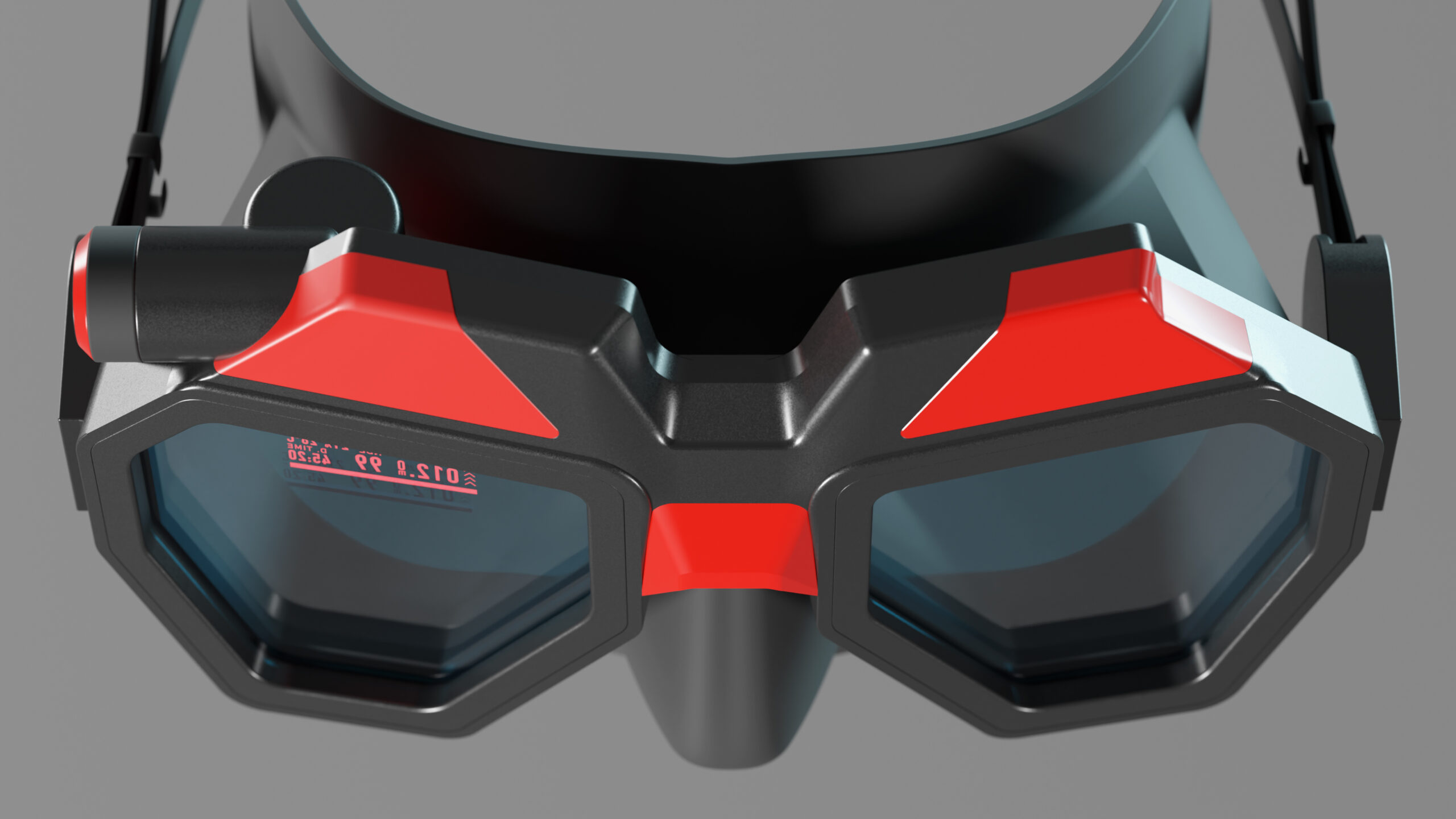
Rheo Dive is the world’s first patent-pending smart dive mask — a fully integrated heads-up display and dive computer built into a scuba mask. Real-time depth, dive time, air consumption, compass heading, NDL, safety stops, ascent rate, and GPS — projected directly into the diver’s field of view. No wrist checks. No head movement. No distraction.
This is not a screen bolted to a mask frame. It is a precision optical system with custom electronics, custom firmware, custom silicone tooling, and a companion iOS app — engineered from a blank page to a mass-producible product.
I own the entire product. CTO role from concept.
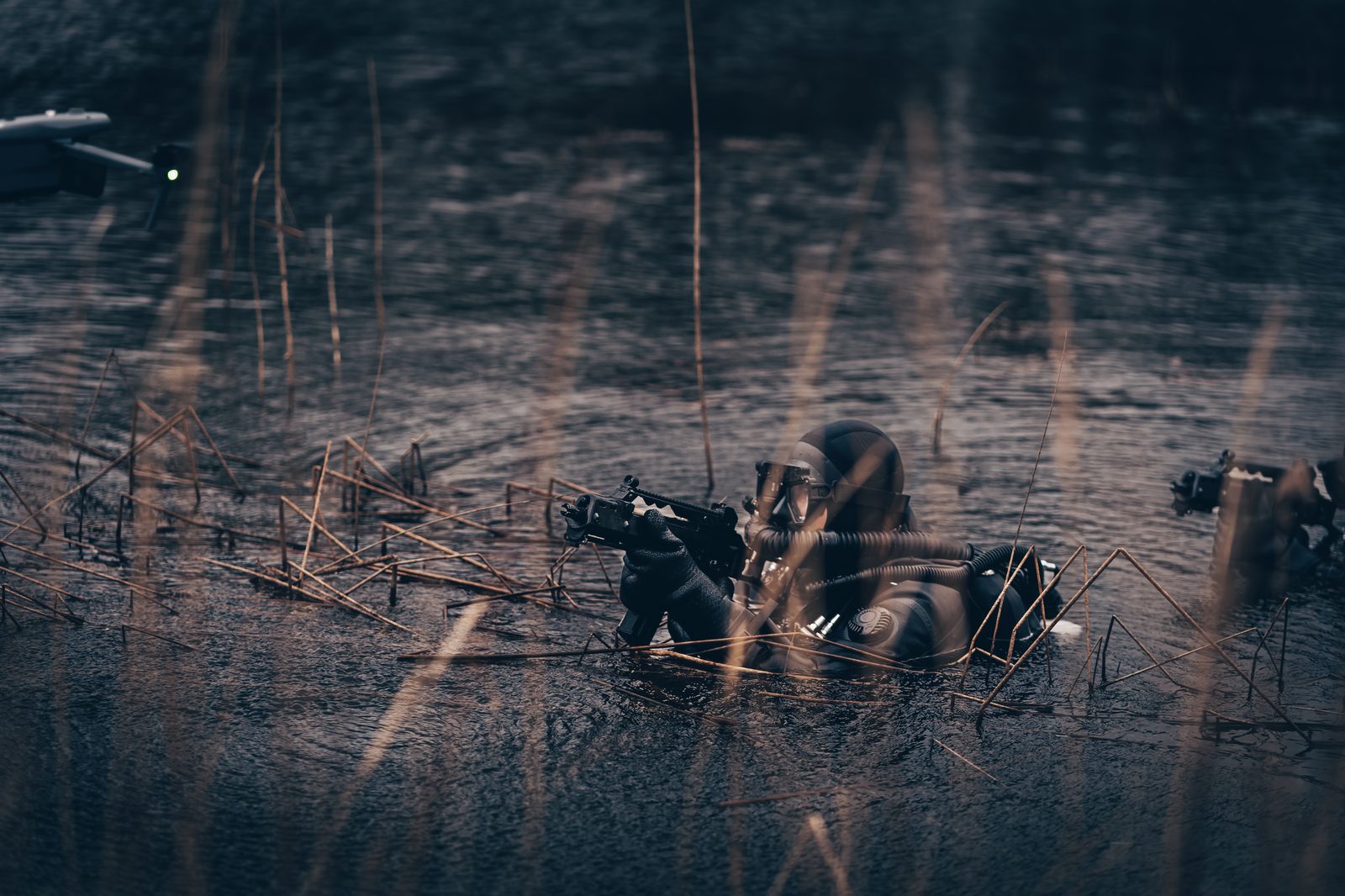 Field testing — Rheo Dive mask in real-world tactical diving conditions. The product was validated in the water, not a lab tank.
The idea
The concept came from a real problem observed during Finger Lakes diving: constantly looking down at a wrist-mounted dive computer breaks situational awareness, forces head movement that disturbs buoyancy, and creates a dangerous habit of splitting attention between the environment and the instrument.
Every existing solution — wrist computers, console gauges, even the few HUD products that have been attempted — requires the diver to look away from what they’re doing. The question was simple: what if the data was just there, always visible, in a minimal overlay that stays out of the way until you need it?
No product on the market did this properly. The few HUD attempts were bulky aftermarket clip-ons with poor optics, limited data, and no integration with the mask itself. Nobody had built a ground-up smart dive mask where the HUD, the dive computer, the optics, the mask, and the companion software were designed as a single system.
So I built one.
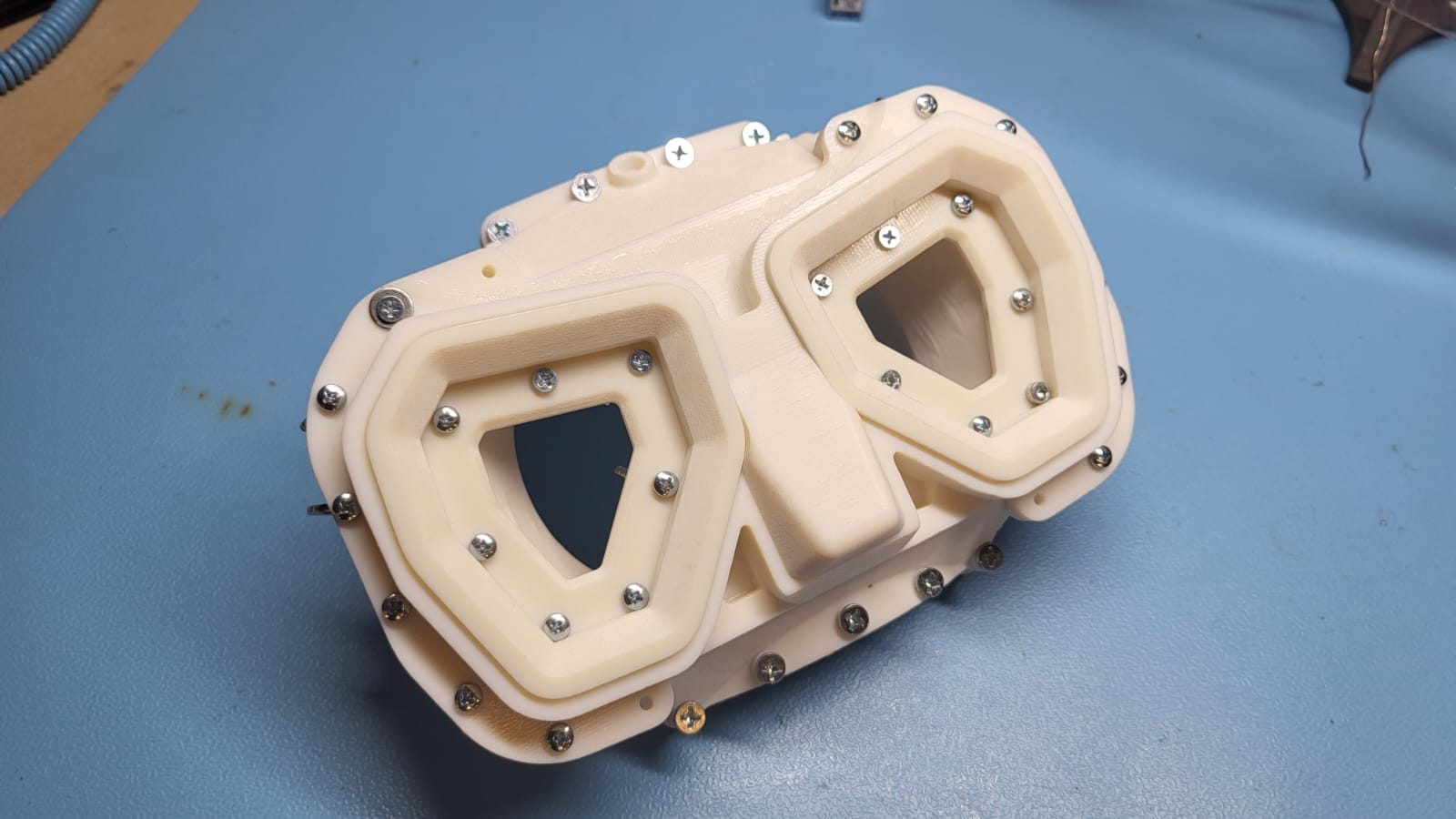 First 3D-printed silicone skirt mold. Custom mold tooling validated before committing to production tooling investment.
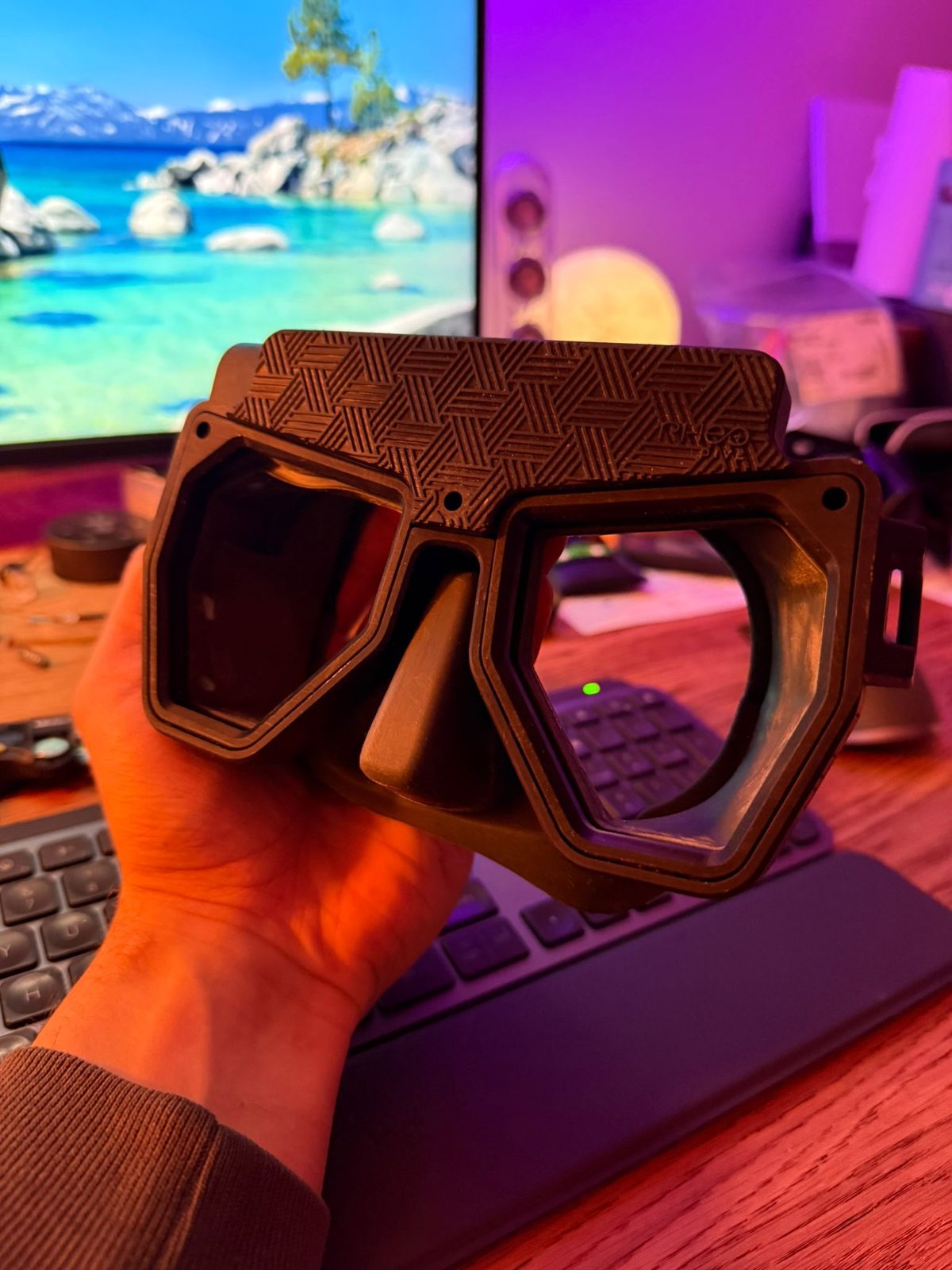 Production-intent frame. Custom tempered glass lenses, diamond-pattern forehead plate, and integrated electronics housing.
From idea to product — the full path
This is a textbook 0→1 hardware product development, running the full engineering lifecycle:
Every stage required decisions that compound. Get the optics wrong in POC and EVT is wasted. Get the silicone skirt geometry wrong in EVT and DVT mold tooling is scrap. Get the PCBA layout wrong in DVT and PVT is a board spin. The only way to run this without burning money is to make the right architecture decisions early and validate the highest-risk elements first.
Custom optics
The optical system is the hardest part of this product. You’re projecting data onto a lens surface that the diver is looking through — at a reef, at a buddy, at a wreck. The HUD data needs to be readable without being distracting. It needs to work in tropical sunshine at 3 meters and in low-visibility cold water at 40 meters. And it needs to fit inside a mask form factor that’s comfortable for hours of diving.
Off-the-shelf display modules couldn’t do this. The optical requirements — focal distance, ambient light rejection tuned for underwater color spectra (blue-green dominant), minimal parallax, compatibility with prescription lens inserts, ghosting suppression at the projection interface — demanded a purpose-built optical assembly.
I designed a custom optical path using a micro-display and collimating lens assembly. The projection system maintains readability from close focus to infinity, with the HUD information positioned just outside the direct line of sight — visible when you glance at it, invisible when you don’t. Multiple prototype iterations resolved chromatic aberration and ghosting at the waveguide interface.
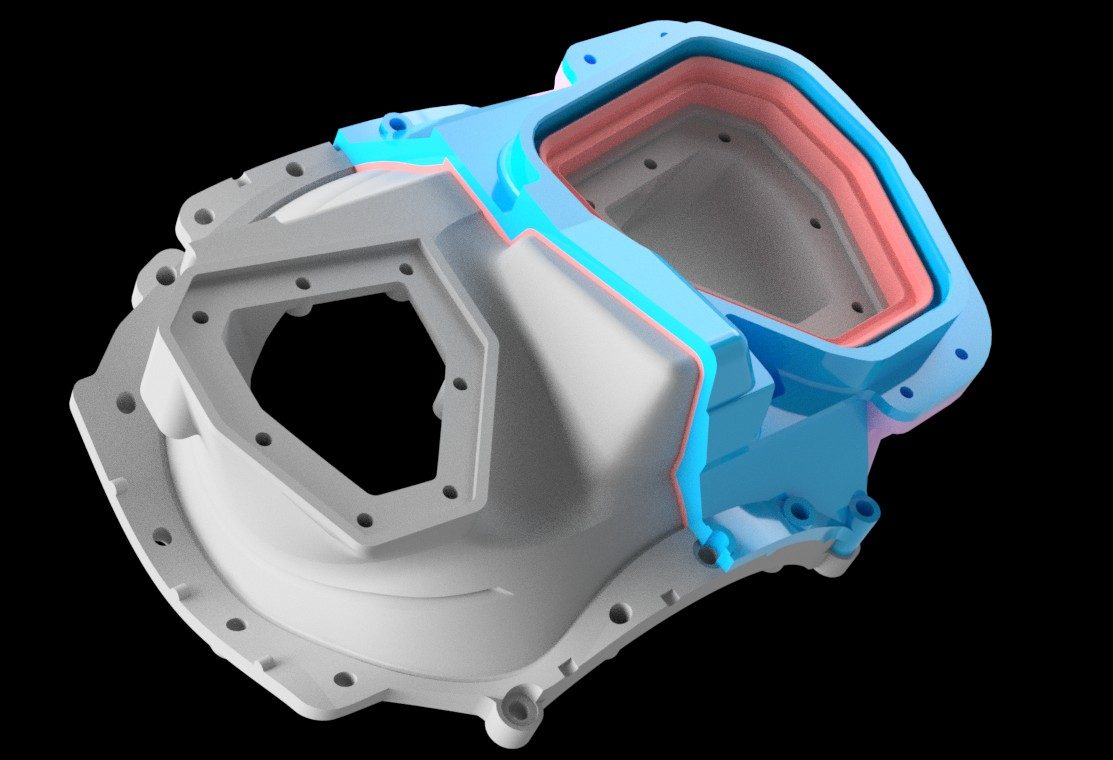 Cross-section — optical housing, silicone skirt layup, and frame structure. Every millimeter is designed around the optical path.
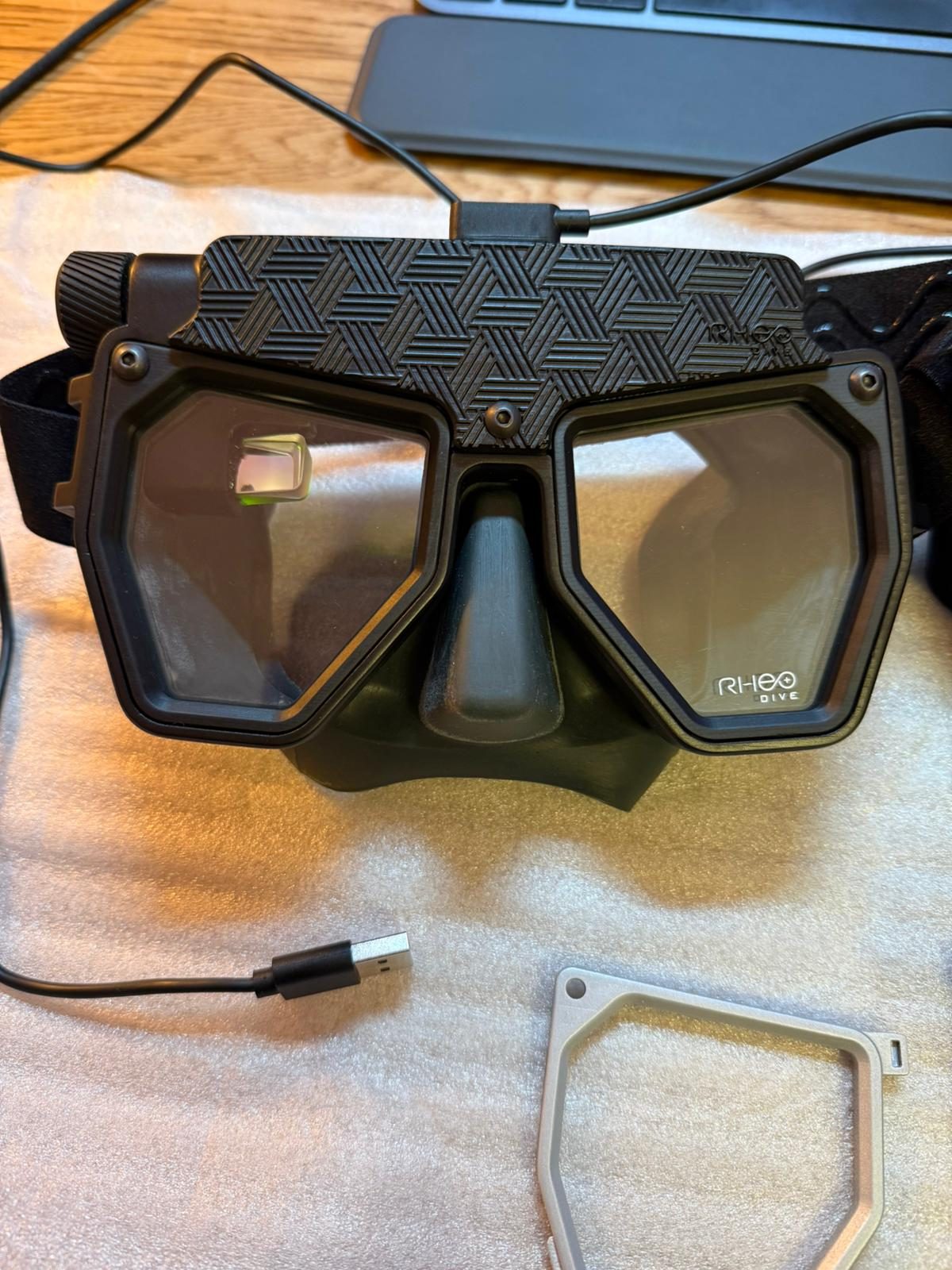 Engineering desk — mask connected for firmware development. HUD projection element visible in left lens. CNC’d frame component at bottom right.
Custom PCBA
The electronics had to do everything a full dive computer does — sensor fusion, decompression calculations, display driving, GPS, compass, wireless communication, battery management — on a board small enough to fit inside a dive mask frame with power consumption low enough for 25+ dives per charge.
The custom PCBA integrates:
Depth & Pressure
High-accuracy pressure sensor for depth measurement, ascent/descent rate calculation, and altitude compensation. The sensor drives the decompression model in real time.
9-Axis IMU + Compass
Magnetic heading, orientation, and motion sensing. The compass provides heading data overlaid on the HUD. Motion data feeds the power management system — the mask knows when it’s being worn.
GPS
Built-in GPS for surface position tracking. Logs entry/exit points, enables surface team tracking, and provides real-time diver location data to the companion app.
Display Driver
Custom display driving circuit for the micro-display optical system. Renders HUD data at consistent frame timing without a GPU — direct framebuffer manipulation with pre-rendered glyph tables for minimum power draw.
BLE Communications
Bluetooth Low Energy for wireless pairing with the companion iOS app. Dive log sync, settings configuration, firmware updates — all wireless. No ports, no seals to compromise.
Power Management
Battery management for cold-water operation (4°C sustained). Lithium cell with low-temperature discharge profile, wireless charging, hardware-enforced cutoff. 25-dive battery life in dive mode.
The entire board is designed as low-SWaP (Size, Weight, and Power) — because every gram matters in a mask that sits on your face for a 90-minute dive, and every milliwatt determines whether you get 15 dives or 25 dives per charge.
Custom display
The display is not an OLED panel or an LCD screen. It’s a micro-display driven through a custom optical path that projects information onto the mask lens. The rendering pipeline runs on the main MCU — no separate GPU. Pre-rendered glyph tables for dive data, direct framebuffer writes for consistent frame timing, and a rendering architecture that prioritizes power efficiency over pixel count.
The HUD shows what matters:
Nothing extra. No fish identification. No social features. The data a diver actually needs, always visible, never in the way.
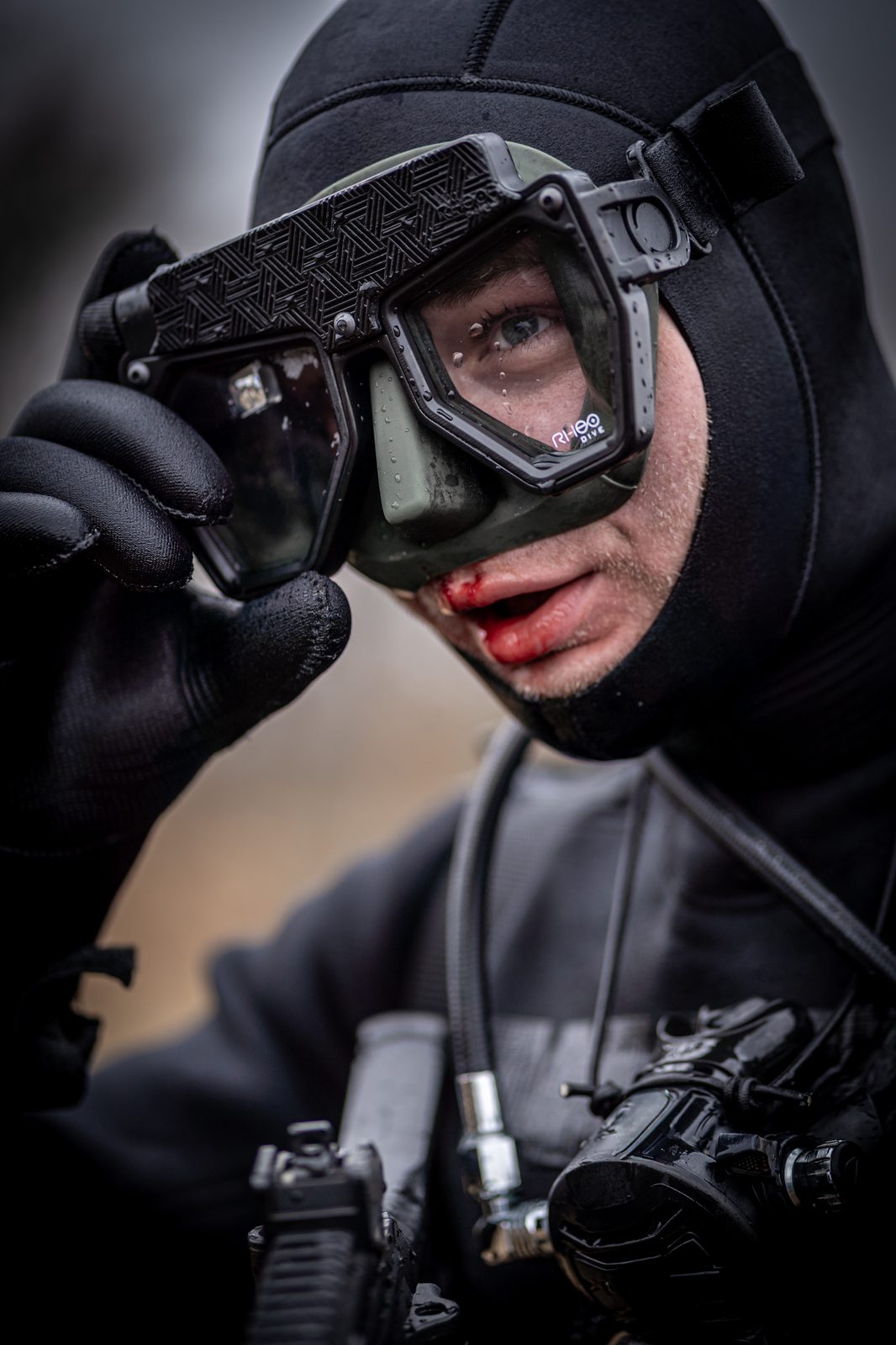 Close-up — the RHEO DIVE logo on the frame. The HUD projection surface is visible in the left lens. Water droplets on tempered glass.
Custom silicone skirt
A dive mask is only as good as its seal. The silicone skirt — the soft part that contacts the diver’s face — determines comfort, fit, and whether the mask leaks at depth. This is where most “smart mask” concepts fail: they try to cram electronics into a standard mask body without accounting for how the added weight, volume, and geometry change the skirt geometry and seal characteristics.
I designed custom silicone skirt tooling from scratch. The skirt form is engineered around the electronics package — the weight distribution, the center of gravity shift from the PCBA and optics, and the modified frame geometry all factor into the skirt profile. The silicone compound, shore hardness, and skirt lip geometry were iterated to maintain a reliable face seal across different face shapes despite the non-standard mask frame.
The skirt is designed as a replaceable component — sustainable design that extends product life without discarding the electronics.
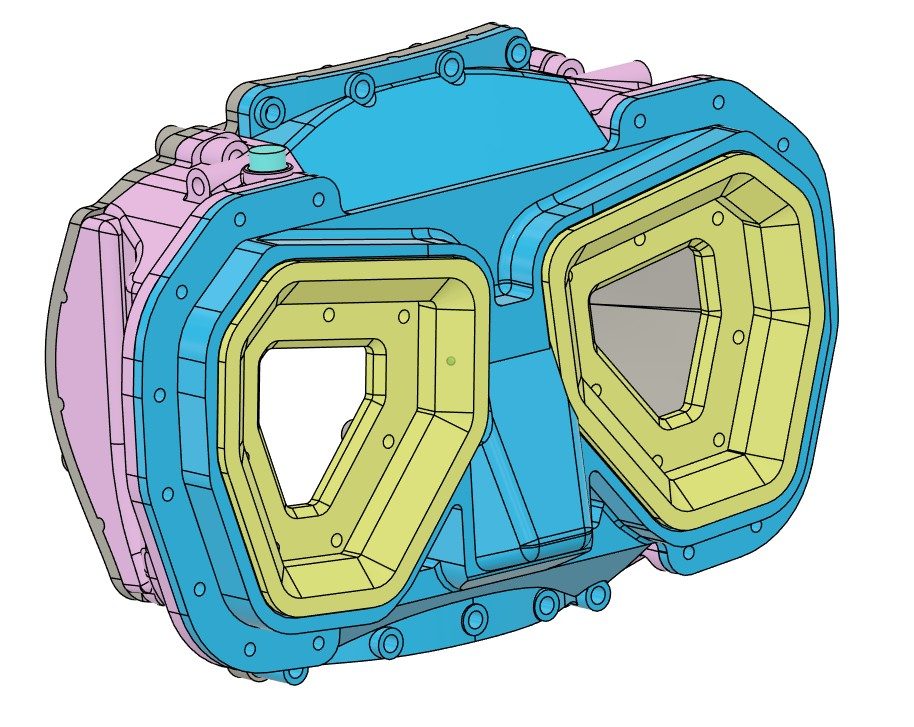 CAD — component breakdown. Frame (blue), silicone skirt (pink), lens assemblies (yellow), electronics housing (gray). Every part is custom tooling.
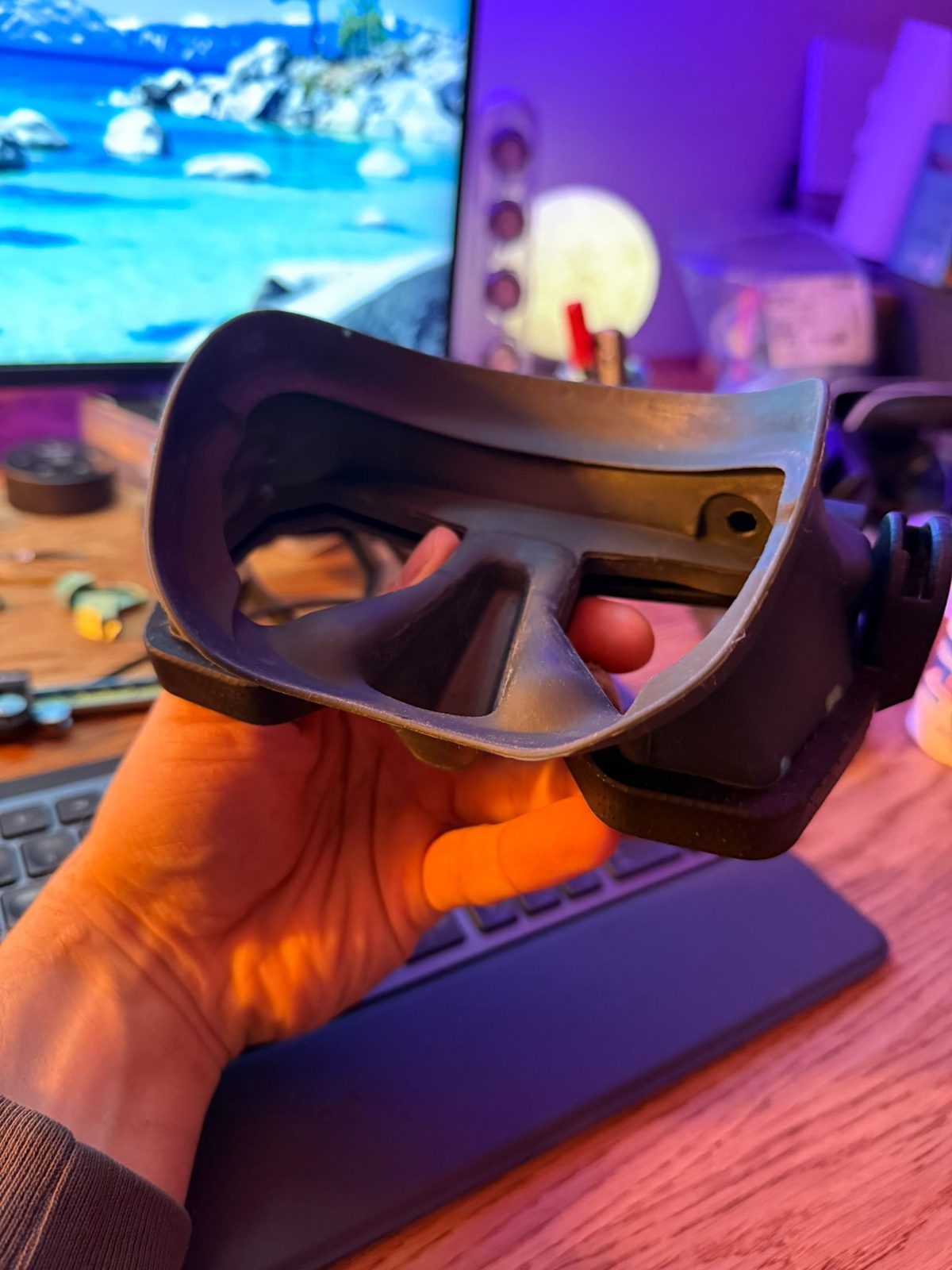 Inside of the custom silicone skirt. The seal geometry is engineered around the electronics package weight distribution.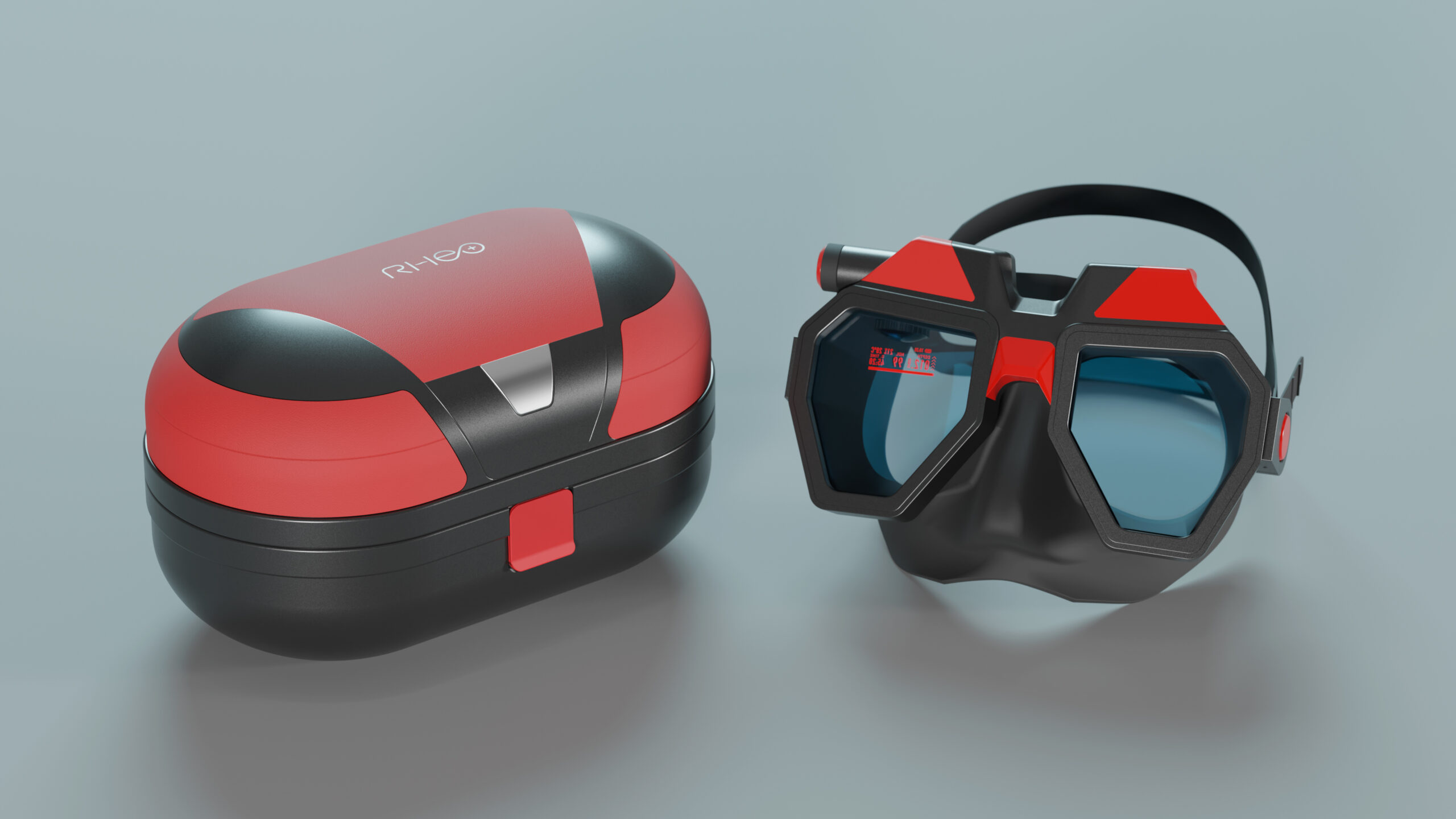
The complete system
Mask + wireless charging case + companion app
- Patent-pending integrated HUD dive computer
- 25-dive battery life, wireless charging
- GPS surface tracking + BLE connectivity
- Replaceable silicone skirt — sustainable design
- Custom protective case with wireless charging
- iOS companion app for dive logging and configuration
iOS companion app
The mask is half the product. The other half is the Rheo Dive Electronic Dive Log app — a native iOS application I built from scratch.
The app handles everything that happens before and after the dive: configuration, dive planning, log review, and data visualization. Dive logs sync wirelessly from the mask over BLE. GPS tracks are displayed on maps. Dive profiles are rendered with depth, time, temperature, and decompression data. Settings — display brightness, data layout, alert thresholds, units — are all configured from the app and pushed to the mask firmware.
The app isn’t an afterthought bolted onto a hardware product. The firmware communication protocol, the data model, and the app architecture were designed together from the start. The mask and the app share a common data schema — there’s no translation layer, no adapter code, no impedance mismatch between what the mask records and what the app displays.
Dive computer firmware
Underneath the HUD is a full dive computer. This isn’t a depth gauge with a timer — it’s a decompression computer that implements real-time deco models, tracks tissue loading across multi-dive days, calculates no-decompression limits, manages safety stop logic, and handles the alert hierarchy that keeps divers safe.
The firmware architecture is layered:
- Real-time sensor layer — pressure, IMU, compass, temperature sampling at consistent rates with hardware-triggered ADC conversion
- Dive computer engine — decompression model, tissue compartment tracking, NDL calculation, ascent rate monitoring, safety stop state machine
- Display renderer — HUD composition, glyph rendering, power-managed display refresh
- Communication layer — BLE stack, dive log serialization, OTA firmware update support
- Power manager — battery SOC estimation, cold-weather compensation, dive-mode power profiling, wireless charge management
Single codebase. The firmware architecture supports hardware variant management through compile-time configuration — the same code drives different board revisions without forking.
The engineering underneath
A few things that define the quality of this product:
Underwater optics are hard. Water changes the refractive index of everything. A HUD that’s readable in air may be invisible underwater. The optical path was designed and validated for underwater viewing conditions from the start — not adapted from an air-optical design. Multiple prototype iterations in actual diving conditions (not a lab tank) were required to get the projection clarity, brightness, and contrast right.
Pressure changes everything. At 40 meters depth, ambient pressure is 5 atmospheres. Every seal, every connector, every component junction is under pressure. The PCBA conformal coating, the display window bonding, the battery compartment seal, the button mechanisms — all designed for sustained pressure exposure, not just a static pressure test.
Thermal extremes. The mask needs to work in 4°C North Atlantic water and 32°C tropical water. Battery chemistry, display response time, sensor accuracy, and silicone flexibility all change with temperature. The firmware includes temperature compensation for every sensor, and the power management adjusts discharge curves based on real-time temperature measurement.
Wearable ergonomics. This isn’t a wrist device. It sits on the diver’s face for 60–90 minutes. Weight distribution, strap loading, nose bridge pressure, field of view obstruction — all of these were iterated through multiple EVT builds with actual divers in actual water. The electronics package had to shrink until it disappeared into the mask frame.
Timeline
Idea born. Navigation challenges observed during Finger Lakes diving. Concept for integrated HUD dive mask defined.
CTO recruited. Product architecture defined. System-level decisions: custom optics, custom PCBA, custom silicone tooling. Risk map established — optics identified as critical path.
POC complete. Diver surveys completed. Key design criteria defined. First 3D-printed prototype produced. Optical feasibility validated.
EVT begins. Optics selected and prototyped. PCB development begins. Initial display testing underway. Patent application filed — status: Patent Pending.
Software development. iOS companion app development started. Dive computer firmware stack under development. BLE communication protocol defined.
DVT — integrated prototype. Software, firmware, and hardware prototype tested and validated underwater. HUD optical performance confirmed in real dive conditions.
GPS integration. GPS module added to the low-SWaP PCB. Surface tracking and dive site logging validated. Feature set locked for production.
Sprint cycle complete. Four 2-week agile sprints for hardware revision, software refinement, and performance tuning. PVT preparation. Kickstarter campaign launched.
Built for the field
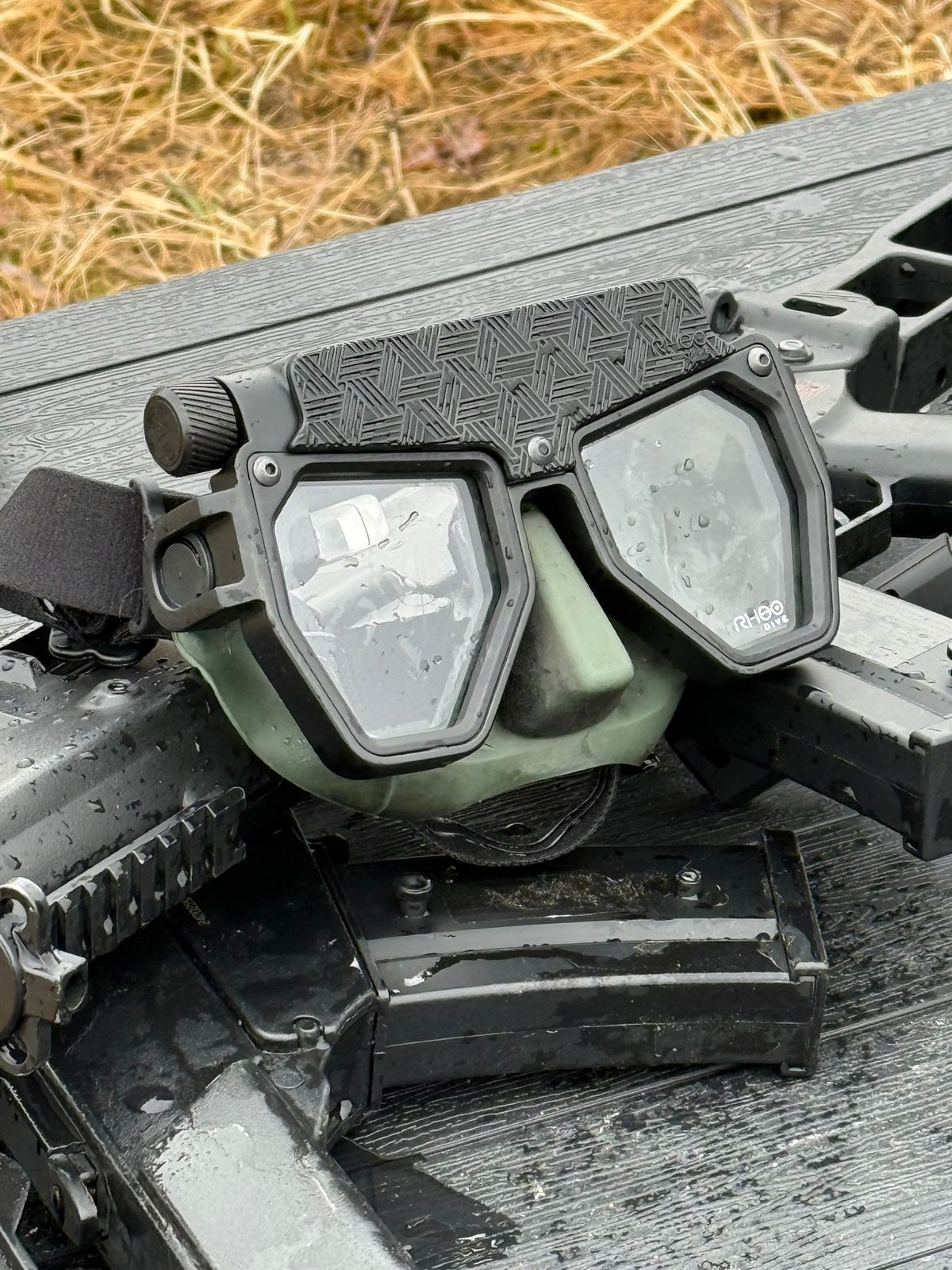 Fresh from the water. Field testing with tactical dive teams.
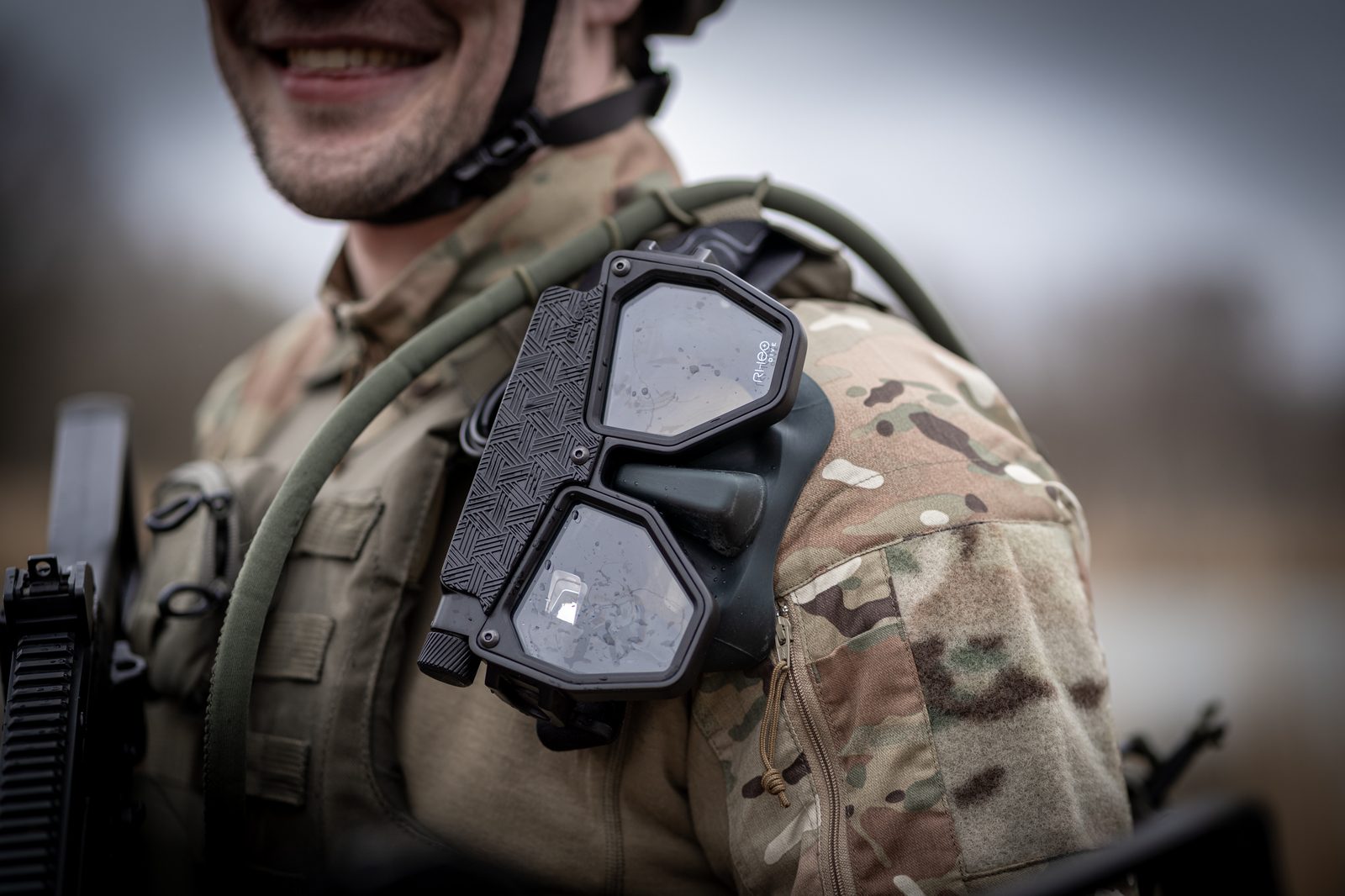 Ready to deploy. Mask on tactical plate carrier between dives.
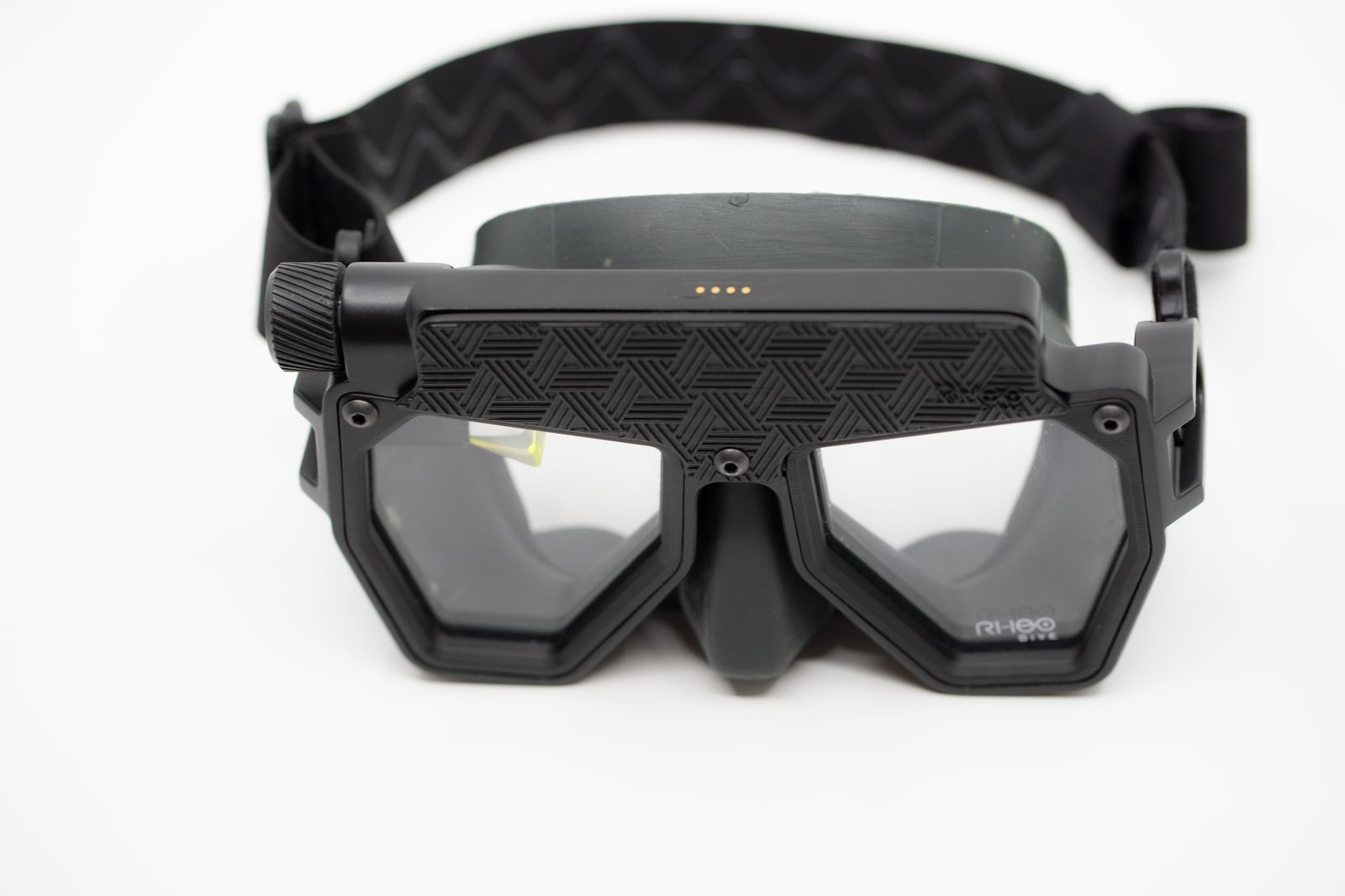 Production-intent mask. Custom frame, custom silicone, custom optics.
 Two-operator water entry. HUD displays active — visible as the green glow in the left lens on both masks.
Who it’s for
Technical Divers
Decompression diving where constant depth/NDL awareness is safety-critical. No more looking away from the environment to check instruments during complex multi-stop ascents.
Dive Professionals
Instructors and divemasters who need to monitor their own data while keeping eyes on students. Underwater photographers who can’t afford to take hands off the camera to check a wrist computer.
Safety & Rescue
Military divers, search and rescue teams, adaptive divers. Environments where hands-free situational awareness isn’t a convenience — it’s an operational requirement.
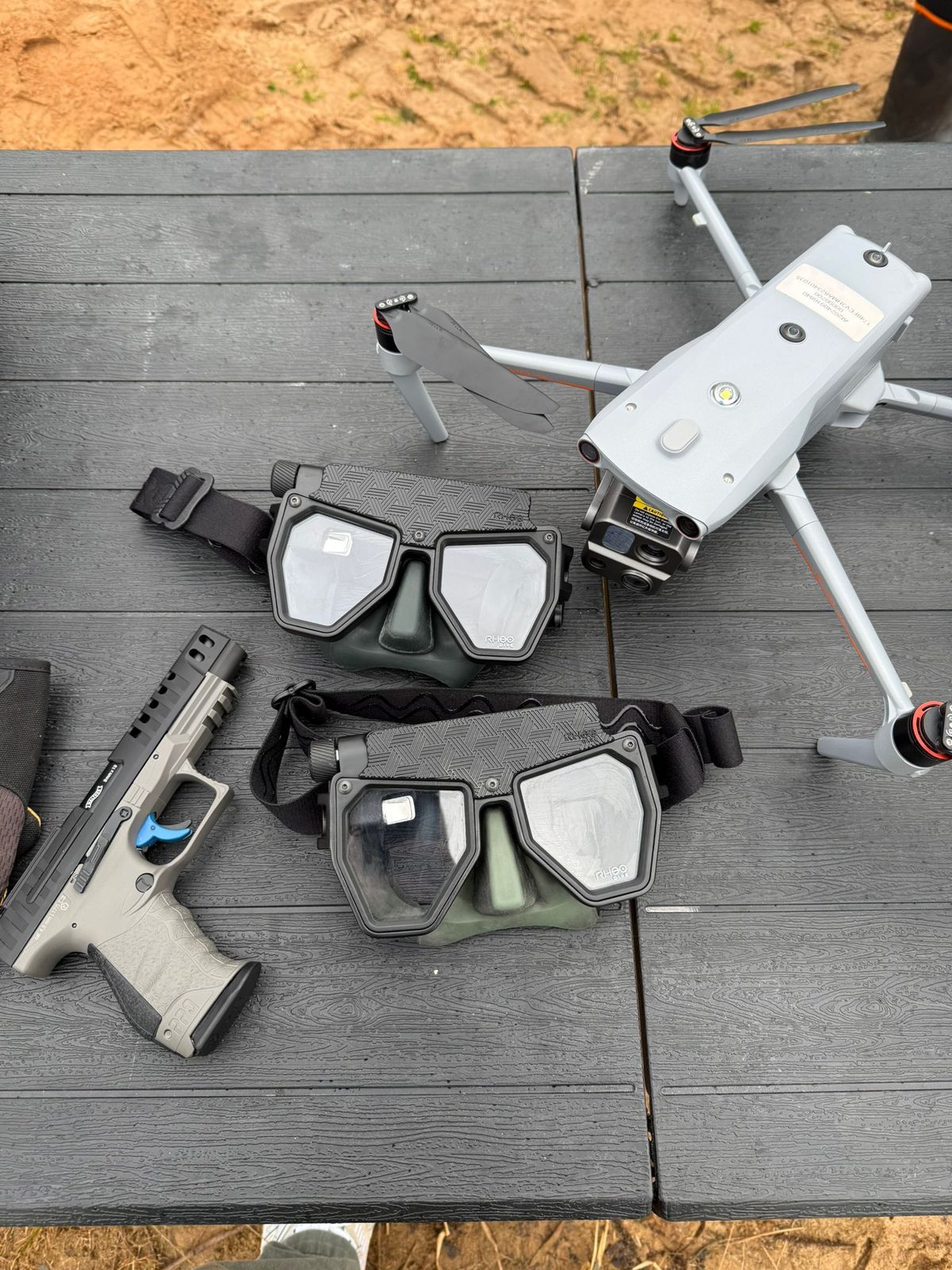 Multi-unit field test. Two production-intent masks alongside aerial reconnaissance drone.
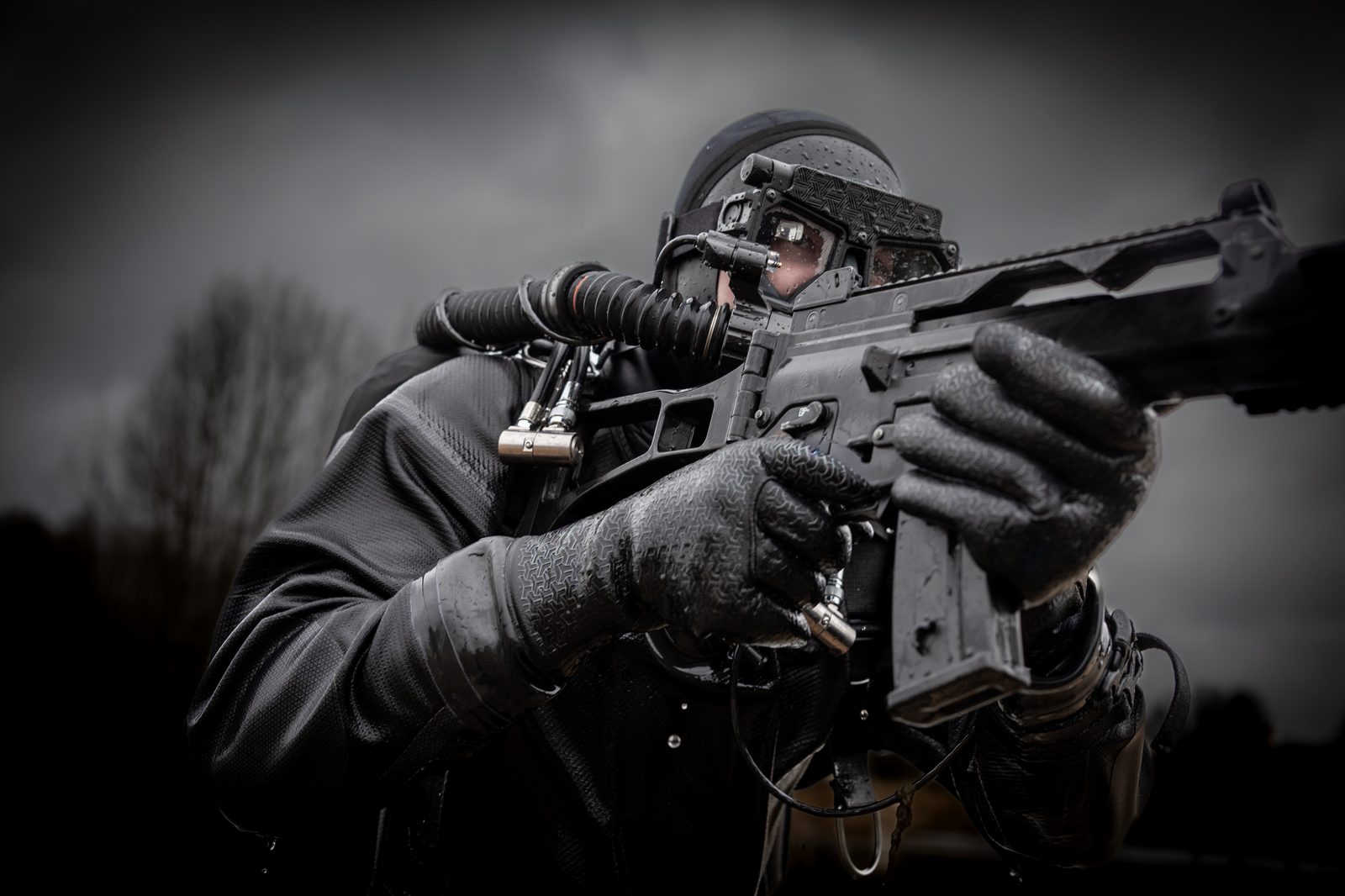 Operational readiness. The mask is designed for environments where hands-free data is a safety requirement, not a feature.
What this demonstrates
This is what full-stack hardware product development looks like when one team owns everything.
Optics, PCBA, firmware, mechanical, silicone tooling, iOS app, BLE protocol, dive computer algorithms, display rendering, power management, GPS integration, industrial design, DFM, patent filing — all from one engineering team, all designed as a coherent system, all moving through POC → EVT → DVT → PVT → MP without the integration disasters that happen when five different contractors build five different subsystems and nobody owns the whole thing.
The Rheo Dive mask exists because every decision — from the optical path to the silicone shore hardness to the BLE packet format — was made by people who understood the full system. That’s how you build a product that works underwater, on your face, for 90 minutes, and doesn’t leak, doesn’t fog, doesn’t crash, and shows you exactly what you need to see exactly when you need to see it.
Building a connected hardware product that needs custom optics, custom electronics, and a companion app?
I’ve done it — from concept sketch through patent filing to production-ready hardware, firmware, and iOS app.
Start a conversation